What employers look for
A registered nurse resume should quickly show license status, care setting, patient responsibility, prioritization, documentation and teamwork.
 New Resume
A strong registered nurse resume makes the match between your experience and the job clear within seconds. Use this page as a structure before you build the final resume.
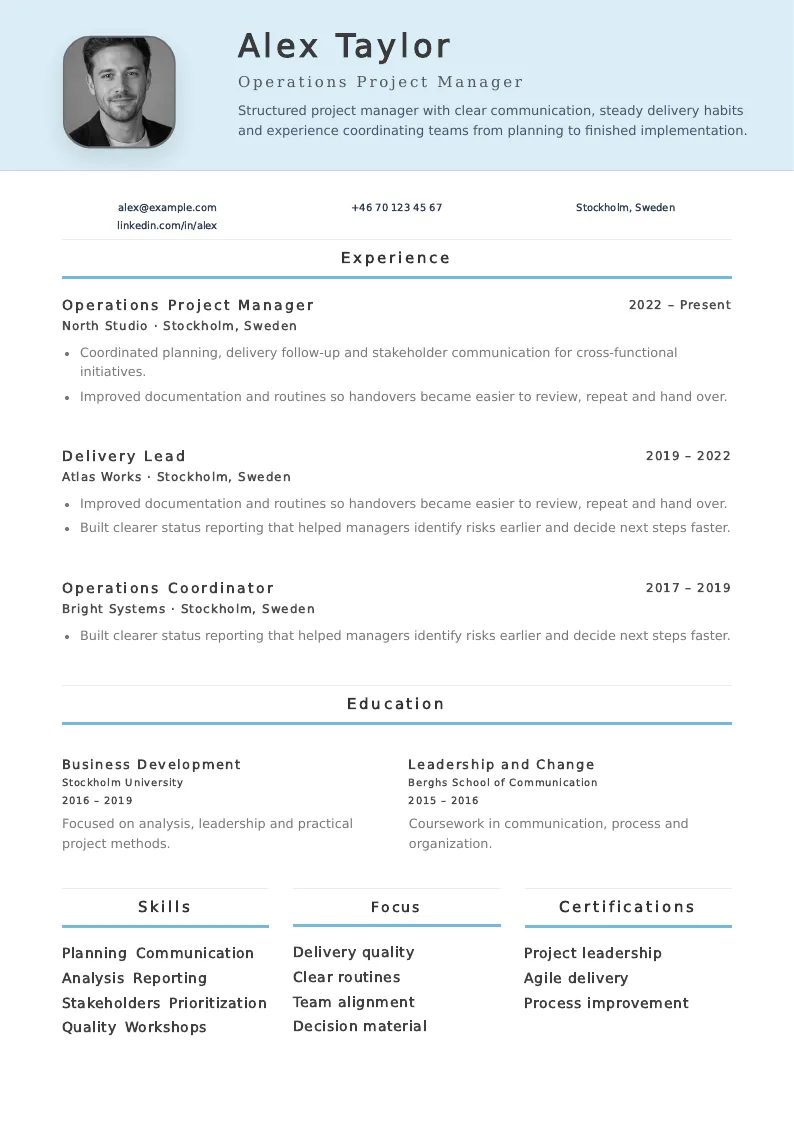
A registered nurse resume should quickly show license status, care setting, patient responsibility, prioritization, documentation and teamwork.
Describe unit type, patient flow, medication routines, triage, care planning and collaboration with physicians, nursing assistants and families.
Relevant outcomes can include safer handovers, improved medication routines, student mentoring or consistent work in high-pressure settings.
Patient assessment, medication administration, charting, triage, phlebotomy, acute care and patient education should appear where relevant.
A clinic, emergency, psychiatry, home health or inpatient resume should each emphasize different responsibilities and examples.
Registered nurse with experience in medical inpatient care, medication administration and coordination for patients with complex needs. Confident in prioritization, charting and communication with patients, families and multidisciplinary teams.
One page is usually enough early in your career. Two pages can work when the experience is relevant and well organized.
Yes. Keep the core structure, but adjust the summary, skills and first bullets to match each job ad.
Choose the skills that match the job ad and that you can prove with concrete examples from your work.
Use the guide as direction, then build, preview and export your resume in New Resume.